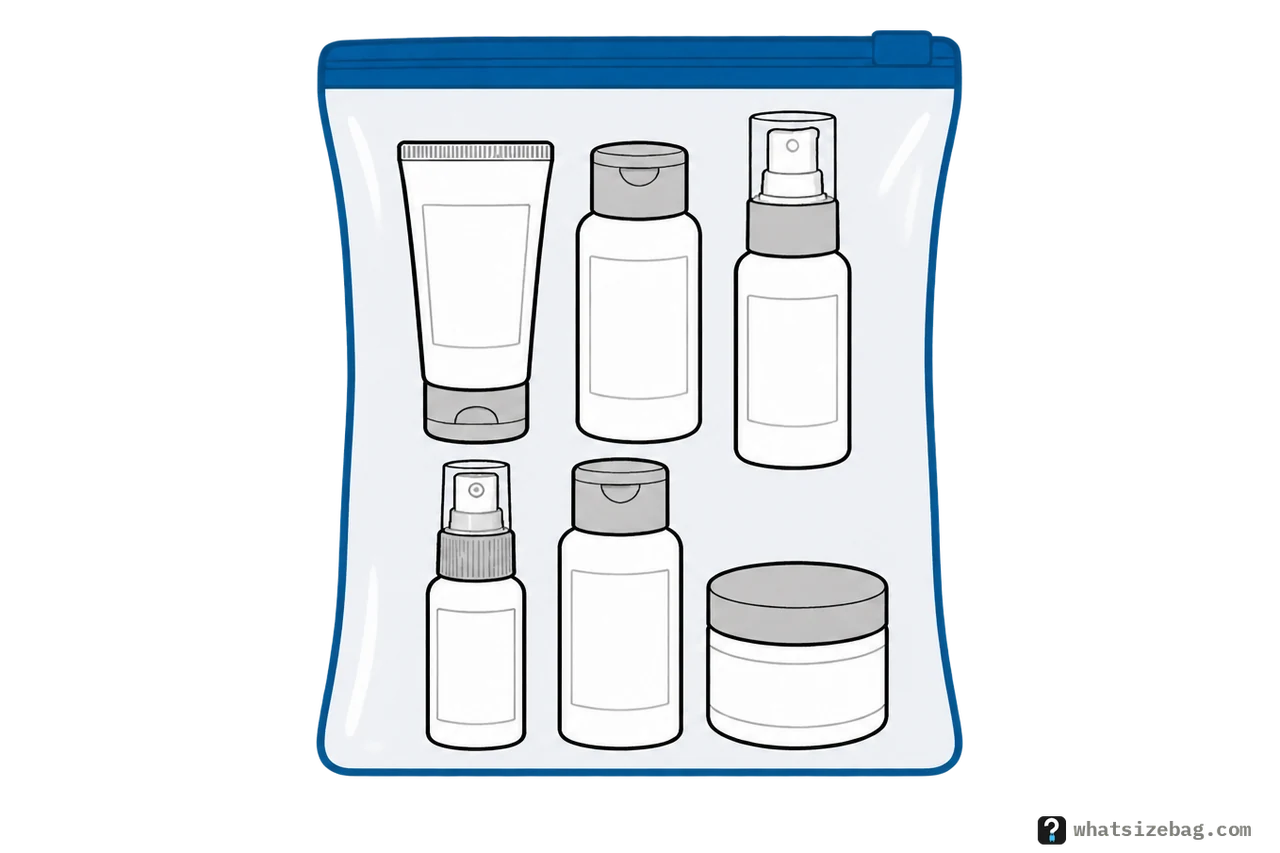
For liquids at a US checkpoint, TSA allows one quart-size bag per passenger, with every container in it 3.4 oz (100 ml) or less.
The liquids bag, by country
The liquids bag for a carry-on, as of October 2026
Where
The bag
Each container
US airports (TSA)
One quart-size bag per passenger
3.4 oz (100 ml) or less
UK airports that ask for a bag
One transparent, resealable plastic bag, up to 1 litre, about 20 x 20 cm
100 ml or less at most airports
EU airports
One transparent plastic bag, up to 1 litre
100 ml or less
Medicine and baby food and milk have their own allowances, outside the bag.
One quart-size bageach container 3.4 oz (100 ml) or less
At a US checkpoint, one quart-size bag holds every travel-size liquid, gel, cream and spray in your carry-on.
A US quart is about 946 ml, a little under the 1 litre bag UK and EU airports use. Some UK airports allow containers up to 2 litres: see UK and EU liquids rules.
Toiletries that aren’t liquids
TSA’s liquids rule covers liquids, aerosols, gels, creams and pastes, so the quart bag only has to hold those. A toothbrush or a comb can go in a separate case.
No, TSA limits each passenger to one quart-size bag of liquids, gels and aerosols through the checkpoint.
Does the liquids bag have to be clear?
UK airports that ask for one want a single transparent, resealable plastic bag, and EU rules call for a transparent plastic bag. TSA's rule names a quart-size bag.
Liquids rules come from TSA, the UK government and the European Union. Toiletry case sizes come from Monos’ own product page. Checked against published data from TSA, GOV.UK, European Union and Monos.
See all 5 sources
TSA, Liquids, Aerosols, and Gels Rule (with its duty free exemption for inbound international flights)
TSA, Frequently Asked Questions: Liquids, Aerosols, and Gels Rule
GOV.UK, Hand luggage restrictions at UK airports: liquids
European Union, Your Europe: luggage restrictions (last checked by the EU June 16, 2026)
Monos, Metro Toiletry Case (monos.com)
General guidance from airline, TSA and FAA rules, checked on the date shown. Rules change, and the airline and security officers decide on the day: check your airline before you fly.