Spare lithium batteries go in your carry-on bag only, and AA, AAA and other alkaline batteries can go in either bag. Every spare needs its terminals protected so they can’t touch metal.
Lithium ion (rechargeable)
Each spare lithium ion battery can be up to 100 Wh. With the airline’s approval, you can also bring up to two spares over 100 Wh, up to 160 Wh each.
That bigger size covers extended-life laptop batteries and some batteries for professional audio and video equipment. To find a battery’s Wh from its mAh and volts, use the Wh calculator.
Lithium metal (non-rechargeable)
Lithium metal batteries, like those in some cameras, LED flashlights and watches, are limited to 2 grams of lithium each. Spares go in your carry-on only.
The DOT rule allows lithium metal batteries over 2 grams, up to 8 grams, only for portable medical devices such as a CPAP, with the airline’s approval. You can carry no more than two of those as spares, and they travel with the device.
AA, AAA, C, D, 9-volt and button cells
Alkaline, nickel metal hydride (NiMH) and nickel cadmium batteries in these sizes are allowed in carry-on and checked bags. They still need protecting from damage and short circuit.
How to protect the terminals
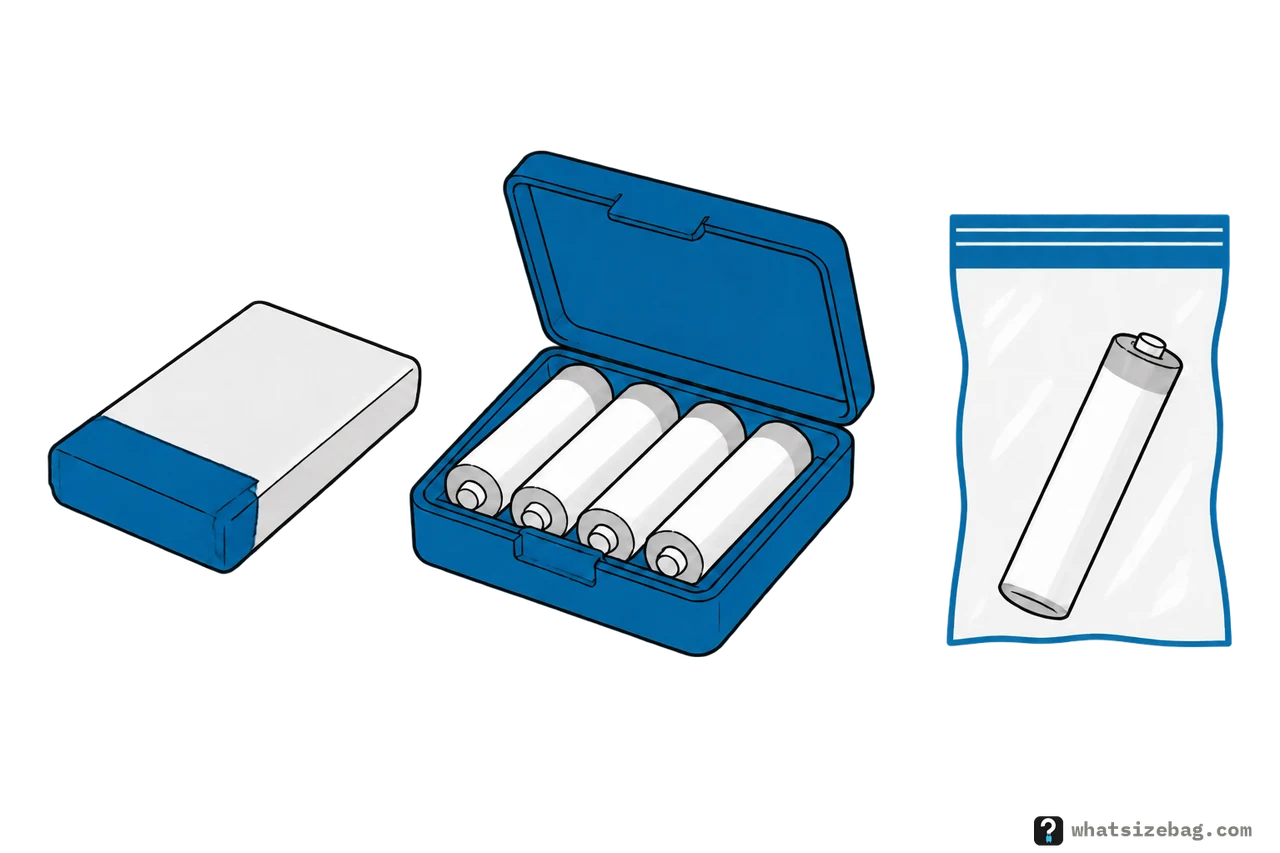
Keep each battery’s ends from touching metal. The FAA lists these ways to do it:
- Leave them in their retail packaging.
- Cover the terminals with non-metallic tape.
- Use a battery case, or a battery pocket in a camera bag.
- Put each one snugly in its own plastic bag or protective pouch.
A rechargeable battery left in its wall charger doesn’t count as protected.
Gel cell and other non-spillable batteries
Non-spillable batteries for portable electronics, such as gel cell batteries, can be up to 12 volts and 100 Wh, with no more than two spares. Pack spares in strong packaging, with the battery and its packaging marked nonspillable.
Damaged or recalled batteries
A damaged or recalled battery can’t fly in either bag unless it’s been made safe. Your airline may have more guidance on a recalled product.